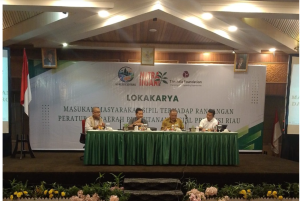
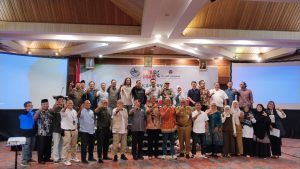
In an effort to strengthen the role of community groups in maintaining forest areas based on social forestry, forest management is more equitable and inclusive. Lembaga Pengelola Hutan Desa (LPHD) and Kumpulan keepers masyarakat pengawas (POKMASWAS) attended training on social forestry, Gender Equality , Disability, and Social Inclusion (GEDSI) and joint patrols organized by Yayasan Mitra Insani.
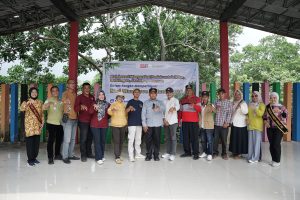
The training, which lasted for three days, 28-30 April 2025, was attended by 32 participants from 12 villages assisted by Yayasan Mitra Insani (YMI).
Strengthening Social Forestry

In the training themed “Strengthening Social Forestry Management groups in supporting the preservation of mangrove natural resources and Fisheries”, the participants received material on the social forestry policy framework, the strategy for preparing the Annual Work Plan (RKT), and guidelines for preparing the Social Forestry Management Plan (RKPS).
This material is part of Yayasan Mitra Insani’s mentoring program in improving welfare, environmental balance and socio-cultural dynamics in the form of village forests and supporting community groups to be able to manage forests in a sustainable, legal, and inclusive manner.
‘Social forestry is community access to land management, not only about access rights for 35 years but also the responsibility and ability to maintain and utilize forests with sustainability principles,’ explained Immanuel Sihaloho, facilitator of the Padang coastal and Marine Resources Management Center (BPSPL
Integrasi Sasaran GEDSI: Gender Equality , Disability, dan Social Inclusion

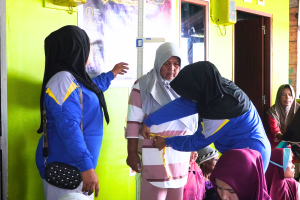
Salah satu sesi penting dalam pelatihan ini adalah integrasi pendekatan GEDSI (Gender Equality , Disability, dan Social Inclusion). Yayasan Mitra Insani encourages forest protection community groups to provide space for women, people with disabilities, and other vulnerable groups in every decision-making process and management of social forestry programs.
The training materials covered the basic concepts of GEDSI, identification of barriers to the participation of vulnerable groups, group discussions on the preparation of more responsive LPHD action plans, as well as learning local case studies in the gedsi approach.
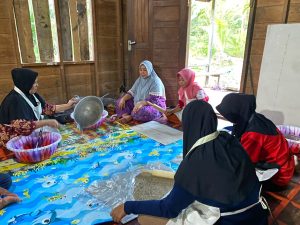
One of the participants from the women’s group, Mrs. Jumriana, revealed the application of Gedsi to the group “ the fair does not have to be equal, we as women can also guard the forest not only carry out housekeeping activities. And we are very happy to be involved in activities such as planting, forest monitoring, and management ” he said.
Field Practice: Joint Patrol Simulation

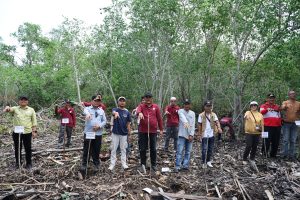
The practice of joint patrols accompanied by Forest Police (Polhut), PSDKP and Basarnas aims to improve preparedness and coordination in maintaining forest areas from the threat of illegal fishing. Patrol practice begins with combing some vulnerable points in the waters around the mangroves, which are important habitats for various types of marine life.
In the simulation, participants were taught how to record findings, use the Avenza Maps map application, and prepare Patrol reports. This joint patrol is also a momentum to strengthen collaboration between LPHD and Pokmaswas groups in participatory forest protection efforts.
Alfian, one of the members of Igal Village LPHD, explained the purpose of carrying out this patrol activity “ this patrol has the purpose of protecting our river from illegal fishing, preserving our sea by patrolling. With that fishermen who use poison can stop”
Lphd member of Pulau Cuaca village Mr. Dodi Subagio also added “ Every time we patrol we never meet the same person, when we get the first findings, the next member of the strike will be given a warning letter. Since there is assistance from the Mitra Insani Foundation, hectares of forest have been saved and recovered in our village”
In addition to surveillance measures, this patrol is also filled with educational activities to fishermen around areas prone to violations. The team socialized fisheries regulations and the importance of maintaining marine sustainability.
“ Alhamdulillah in the patrol activity earlier we did not find violations of the waters. The surrounding community uses safe fishing gear such as Arianto, fishermen use splint fishing gear and tonggoh fishing gear who are catching shrimp” said Sri Harini, a female representative of the LPHD group.