“For us here, sago is still a staple food that replaces rice. Sago is still abundant in neighboring villages. We never imagined that sago could be processed into a source of income for our families.”
These words begin the story of the Al-Mujahiddin Women’s Group of Batang Sari Village, a coastal village surrounded by expansive mangrove forests in Indragiri Hilir Regency. Empowered by the desire to find alternative livelihoods, they forged a new hope through chips—not the usual cassava or banana chips, but sago chips made from sago rendang. The product is processed from sago starch through a traditional sedimentation and drying process.
For coastal communities, sago has long been a part of everyday life. Now, through the innovation and creativity of the women’s group, sago rendang is processed into chips that not only have a distinctive flavor but also add value to local potential and open up opportunities for family economic development.
Making Process
“The key is the cleanliness and dryness of the sago. This is good quality sago, it’s white,” said Mrs. Zaunah, the head of the Al-Mujahiddin Group, while sifting the sago grains. “If the sago is damp, the chips won’t be crispy and will quickly go rancid.”
The rendang sago is then mixed with simple spices such as ground garlic, coriander, a little flour, salt, and natural flavorings, a recipe that has been passed down through the generations. Then, water is added little by little while the mixture is stirred until it has a soft texture and is perfectly combined.
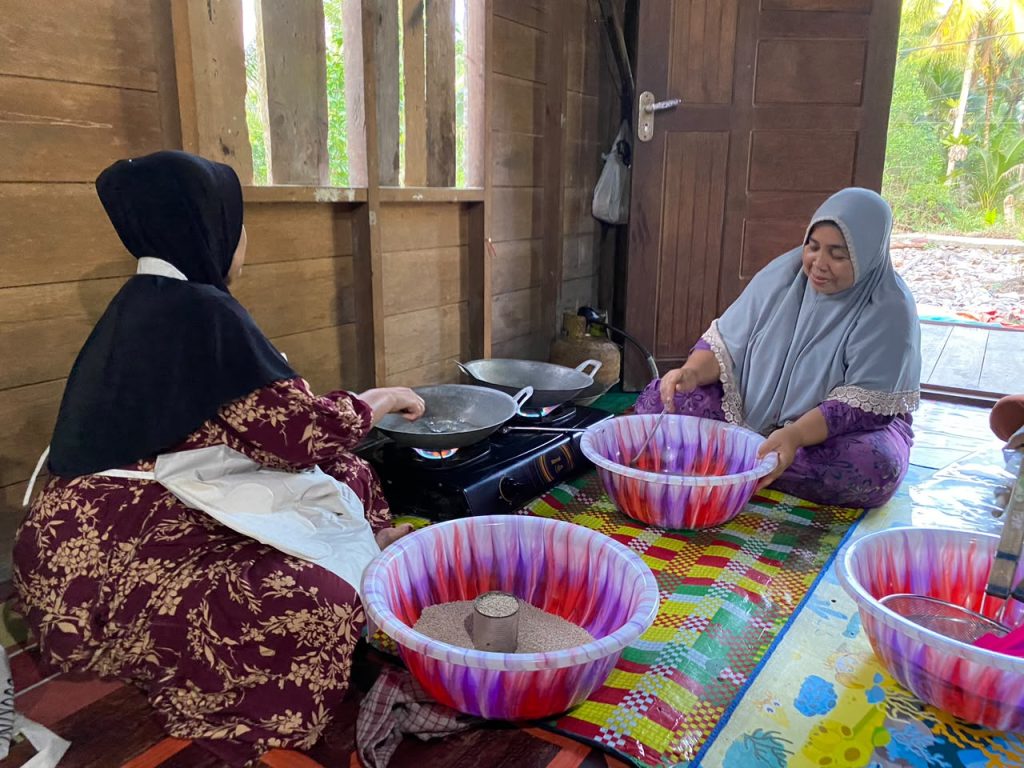
No modern machinery dominates this production process; much of the work is done collaboratively using simple kitchen equipment. Between mixing the dough, the jokes and laughter of the group members create a warm and collaborative atmosphere.
Once the dough is ready, it is sautéed without oil until thickened. The dough is flattened using a manual rolling pin into thin sheets of uniform thickness to ensure even cooking. The sheets are then cut to the desired size.
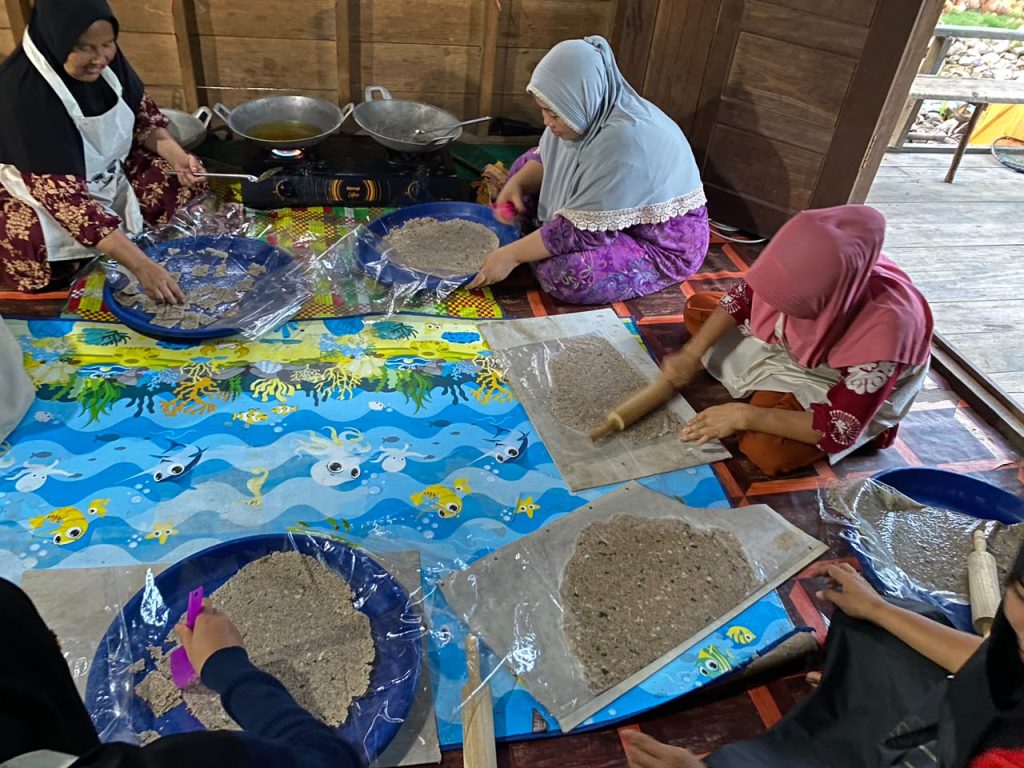
The dough pieces are dried in the sun until completely dry. At this stage, the weather is a crucial factor. When the sun is shining brightly, the drying process can proceed more quickly and produce crispy chips. Conversely, when it rains, the drying time takes longer, requiring the group to adjust its production schedule.
“Without drying, the crackers can be fried, but the results won’t be as crispy as those dried in the sun. We’ve learned that to achieve good results, we can’t rush,” explained Tuti Ruyani, a group member, as she arranged the sago chip pieces.
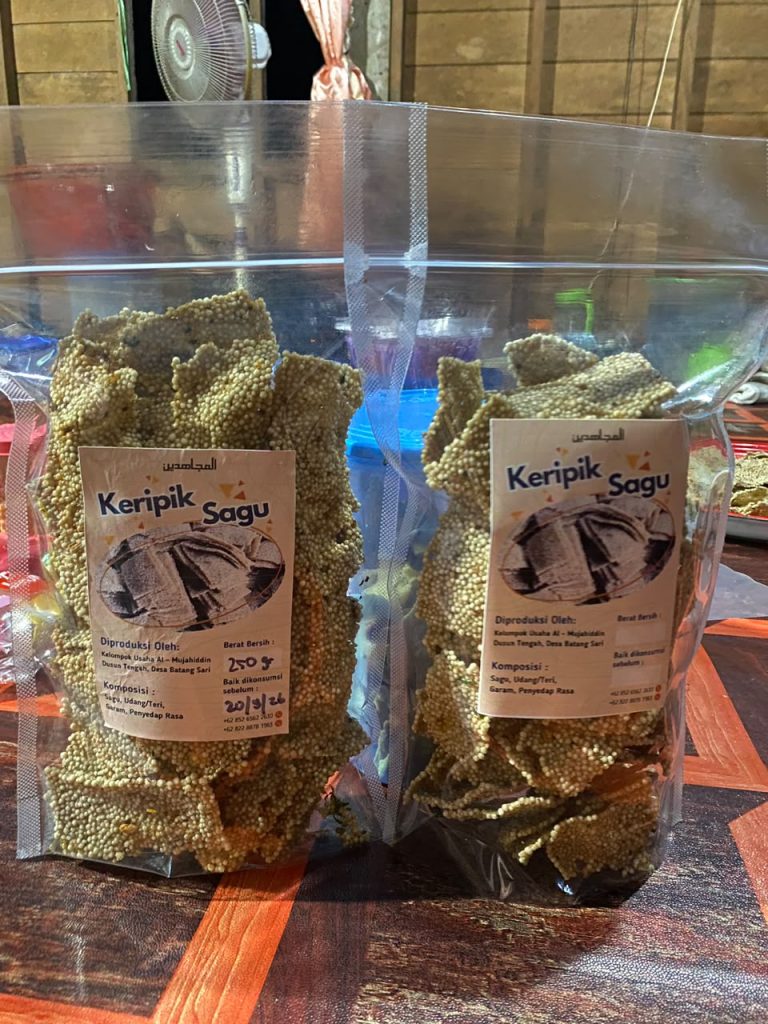
Once dry, the chips are ready to be fried in hot oil at a stable temperature until they puff up and turn golden. A savory aroma immediately fills the room, indicating the chips are done. After being drained and cooled, the chips are neatly packaged to maintain their quality and crispiness until they reach consumers.
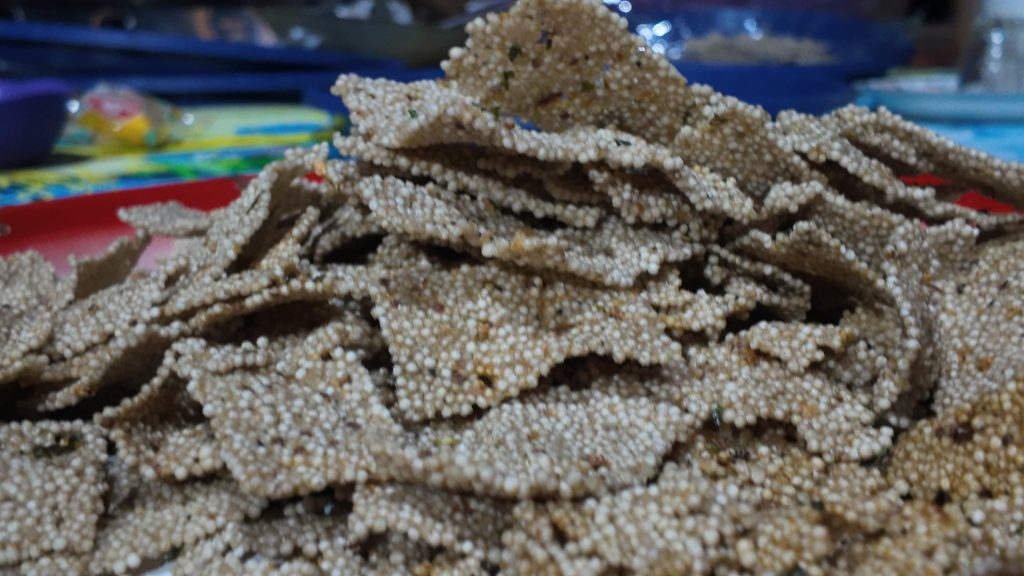
The Al-Mujahiddin group’s journey certainly wasn’t always smooth sailing. In the early days of their business, they had to try several times to find the right dough composition for crispy chips with a consistent taste. There were times when the chips failed to rise, were too hard, or even broke during packaging.
However, these failures served as learning experiences that strengthened the group’s cohesiveness. They shared experiences, evaluated each production process, and continuously made improvements until they produced a quality product.
One of their proudest achievements was when their sago chips made from rendang sago successfully received halal certification. This certification not only acknowledged that the product was processed according to established standards, but also increased consumer confidence and expanded marketing opportunities.
For the group members, the halal certification was proof that their home-made product had developed into a product that met standards and was suitable for marketing to a wider audience. extensive.
“What we are most grateful for is not only that the chips are selling well, but that we now have a profitable activity. This way, we can help meet household needs, and our products are loved,” said one group member, showing off a package of chips ready for marketing. For him, each package of chips is more than just a snack, but the result of hard work, togetherness, and hope built by all group members.
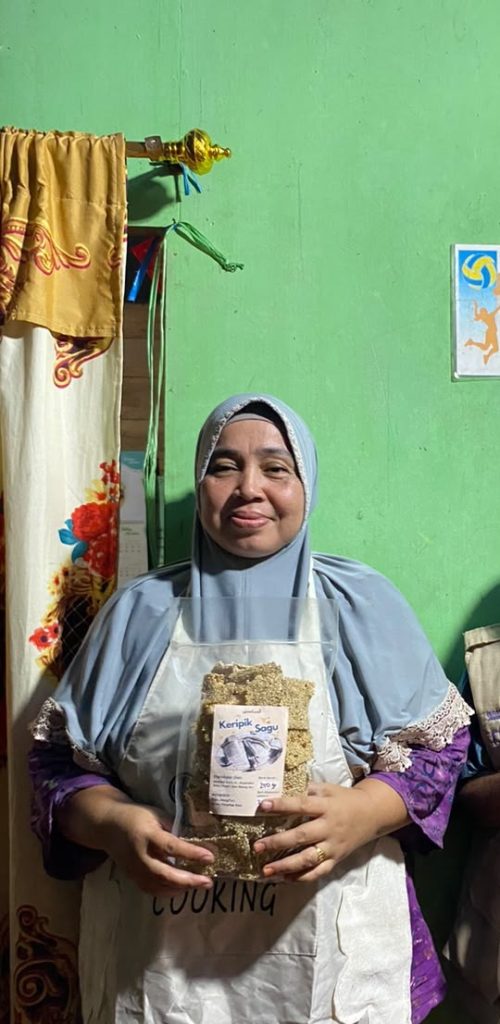
In addition to improving their production skills, the group members also began learning to manage their business more professionally. They divided tasks according to their respective abilities, from preparing raw materials and handling the production process, packaging, and marketing.
The mentoring they received not only taught them how to make a good product, but also the importance of maintaining quality, building product identity, and expanding market access so their businesses can grow sustainably.
Now, every package of sago chips sold is more than just a processed food product; it symbolizes the successful empowerment of coastal women in transforming local potential into a sustainable livelihood. Starting from a simple kitchen in Batang Sari Village, the spirit of learning, collaboration, innovation, and ongoing mentoring has created a business opportunity that not only increases family income but also strengthens women’s independence and the economic resilience of coastal communities.
(Activities supported by OCEAN (Ocean Community Empowerment and Nature Programme), funded by UK International Development from 2024-2027)
Writer: Dhifa_Officer Media Yayasan Mitra Insani