Small-scale fisheries management in coastal areas is an effort to maintain the sustainability of marine resources through wise, planned, and community-based utilization. This activity includes regulating fishing, protecting coastal ecosystems, and empowering fishermen to improve economic well-being in a sustainable manner. Good management will maintain the productivity of fisheries resources, the sustainability of the coastal environment, and the long-term well being of coastal communities.
WHAT TO DO?
Local Fisheries Regulations:
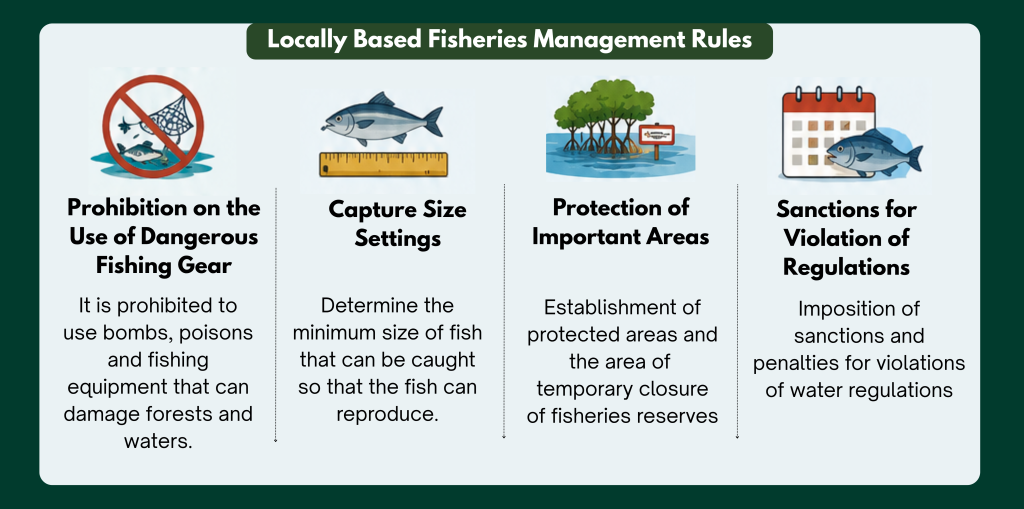
Managing fisheries in coastal areas through the development of local fisheries regulations is a crucial step in maintaining the sustainability of marine resources. These regulations are developed through participatory collaboration with fishermen, village governments, community groups, and other stakeholders based on local conditions, needs, and resource potential.
The implementation of local fisheries regulations also strengthens the community's role in monitoring and managing coastal areas. Through collective agreements, public awareness of marine conservation is increasing, ensuring that populations of fish, crabs, and other marine life are maintained and utilized sustainably by future generations.
Fisheries Savings:
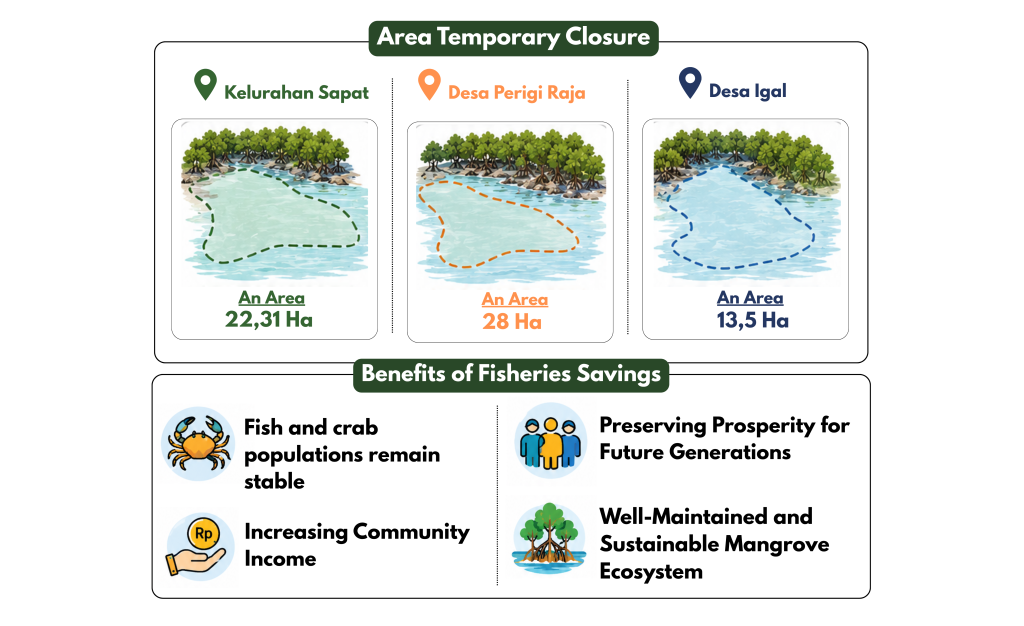
The temporary closure of fisheries reserves is a coastal resource management effort that involves the temporary closure of mangrove crab fishing areas for three months. This closure aims to provide opportunities for crabs to grow, reproduce, and maintain the balance of the mangrove ecosystem. This collaborative effort with the community demonstrates a commitment to maintaining the sustainability of fisheries resources. Through the temporary closure, it is hoped that community catches will increase in the future while supporting the preservation of mangrove crab habitats in coastal areas.
Fisheries Data Collection:
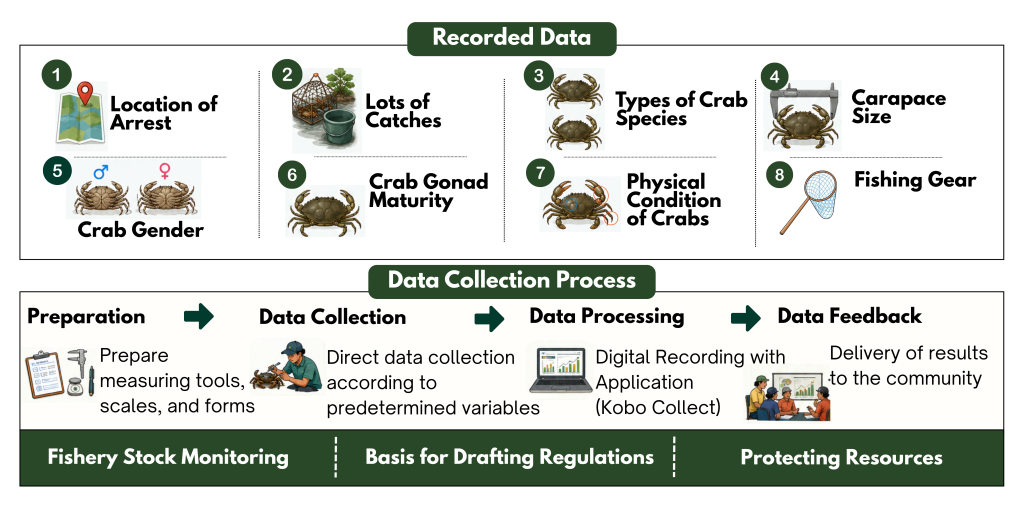
Data collection for the mud crab fishery is a routine information-gathering activity carried out by enumerators to assess the status of fishery resources in a given area. Data are obtained through direct measurement. This activity aims to provide accurate data on population status and exploitation levels, serving as a foundation for formulating policies and sustainable fishery management strategies—including harvest regulations, mangrove habitat protection, and conservation initiatives such as fishery "savings" (temporary closures).