Household waste is the largest contributor to waste accumulation in Indonesia.
According to data from the National Waste Management Information System (SIPSN) of the Ministry of Environment and Forestry (KLHK) in 2022.
The input from 202 districts / cities throughout Indonesia called the number of national waste dumps reached 21.1 million tons.
This causes waste to become a cultural problem because of its impact on various sides of life, especially in coastal areas.
Coastal communities still use individual garbage bins to dispose of household waste because they do not have a landfill.
Therefore, people usually burn the garbage that has been collected and other alternatives by being thrown into the sea which can cause damage to marine ecosystems.
Whereas household waste can be reused into useful items and can have considerable economic value.
How to handle it can use the concept of 3R; Reduce (restriction), Reuse (daurguna), Recycle (recycling) and the introduction of appropriate technology in waste processing to the community.

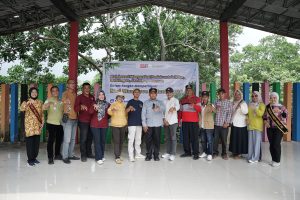
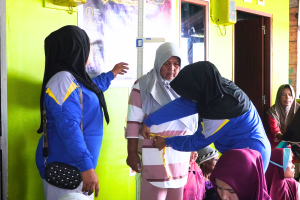
Yayasan Mitra Insani provides training on processing household waste waste with EcoBrick and Ecoenzyme manufacturing methods to Posyandu cadres, PKK cadres, village midwives, and housewives.
Methods Of Processing Household Waste
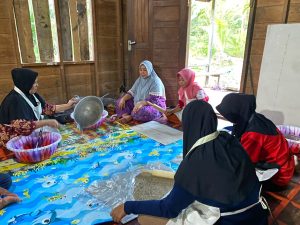
EcoEnzym is the result of fermentation of organic kitchen waste, sugar (brown sugar, brown sugar or cane sugar), and water in a ratio of 3 : 1 : 10.
Basically, eco-enzymes accelerate bio-chemical reactions in nature to produce enzymes that are useful in the utilization of fruit or vegetable waste.

In this eco-enzyme practice, pineapple fruit waste is mixed with brown sugar and water in an airtight container that is tightly closed.
Next, the fermentation process is carried out for 90 minutes.
After that, it is filtered to be separated from the pulp. The result of this fermentation can be used for natural cleaning and washing of vegetable fruits.
While EcoBrick is a method used to minimize plastic waste that is cut into flakes with plastic bottle media.
Dry plastic bottles are filled with inorganic waste until the bottle is really hard and dense.
Examples of the use of EcoBrick making are for making tables, chairs, walls, and other art items.

From this activity, it is expected that the community will be able to make household waste processing more useful.