
Forests and land are vital resources for environmental balance and biodiversity, as well as sources of livelihood for local communities. Forests serve as carbon sinks, regulate water systems, and provide habitats for flora and fauna, while land supports various community economic activities.
Amidst the threats of deforestation, degradation, and land-use conversion, social forestry has emerged as a strategy for sustainable forest management. By granting local communities legal access, management balances ecological, economic, and social aspects—for instance, through agroforestry, the utilization of non-timber forest products, and environmental conservation activities.
Deforestation, unclear forest access and legality, limited community management capacity, and persistent market and business capital constraints. Conflicts of interest and economic pressures drive overexploitation.
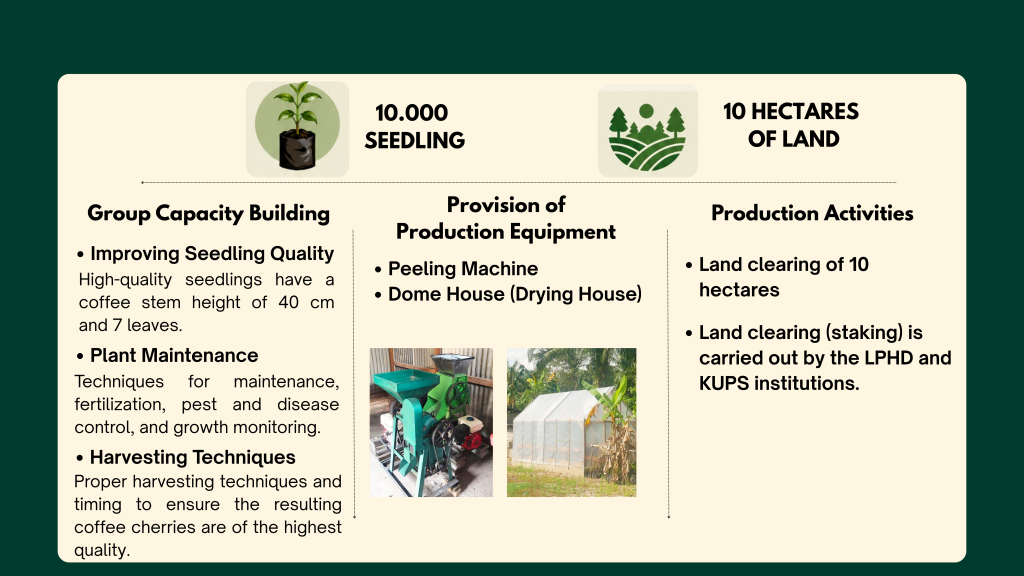
Social forestry is supported by strengthening legal certainty through Decrees (SK), increasing community capacity through training and mentoring, participatory conflict resolution, expanding market access and partnerships, and developing sustainable forest-based businesses.
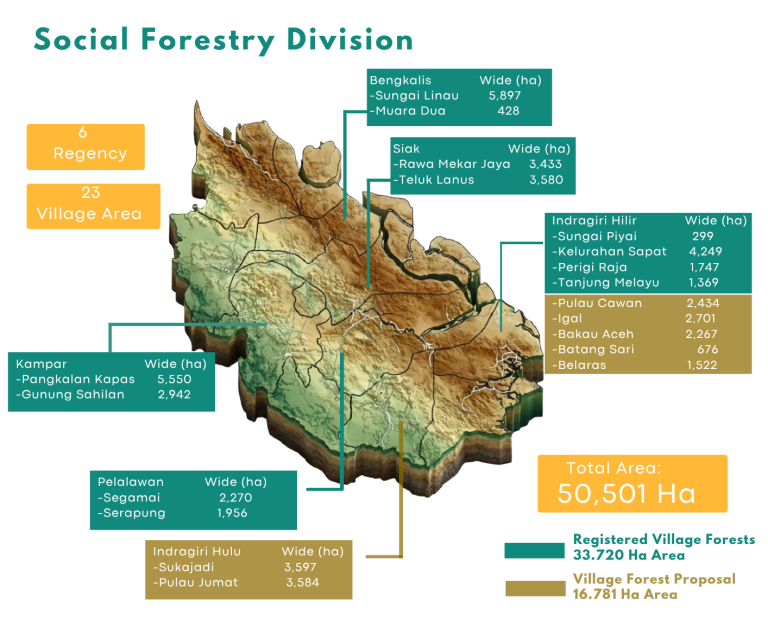
We help ensure equitable and sustainable environmental management, both ecologically, socially, culturally, and economically in rural and surrounding forest areas.
Increase public awareness of the potential, problems, and opportunities that exist in their environment in order to appear a sense of belonging and motivation to change.
Provide training, mentoring, and skills improvement so that people have the ability, knowledge, and confidence to manage their potential.
Open access to resources (capital, technology, information, networks) and strengthen local institutions so that people can be independent and empowered in the long term.

Need more help?
Email Us